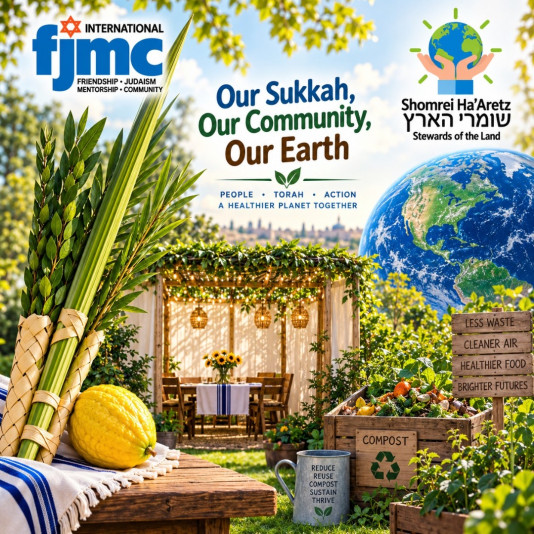
The sukkah reminds us that we are not separate from the environment, but part of it. Its open walls invite us to appreciate the earth, the fragile roof teaches us about humility, and its temporary shelter challenges us to consider how we protect the world we share. In the spirit of Shomrei Ha’aretz, the sukkah calls us to turn gratitude for nature into a responsibility to care for our planet and future generations.
Sukkot gives us the opportunity to talk about housing issues, homelessness, farmers to provide healthy food, and while we sleep and eat in the sukkah, it connects us to the wind, air, sun, moon and stars. The Jewish holiday of Sukkot and the construction of the sukkah teaches us to prohibit wasteful consumption, and inherently promote recycling, composting, and the use of sustainable products.
Sukkot is a natural connection to the environment because it is a holiday centered on nature, harvest, shelter, and our responsibility to care for the earth. The lulav and etrog come from different parts of the natural world.
When we compost, the idea is simple: what came from the earth, can return to the earth.
Click here to read the entire article!
Click here to learn more about the FJMC Shomrei Ha'aretz Initiative! |