




By Rabbi Noah Raucher
Not long ago, I sat in a committee meeting in which we discussed the topic that comes up in nearly every volunteer organization these days: how to integrate new, and ideally younger, men into leadership. As we brainstormed names, strategies and pathways, a question surfaced—first as an aside, then as a quiet refrain echoing through the conversation: What am I getting myself into?
We weren’t asking for ourselves. We were channeling the question that any potential new leader—especially a man juggling work, family and personal obligations—would likely be asking. It’s a reasonable question. In today’s world, where time feels scarce and attention is constantly divided, men weigh every new commitment against an already-overfilled life. The cost of leadership isn’t abstract; it’s measured in nights away from home, unread bedtime stories and postponed rest.
But underneath the practical calculus lies something more spiritual. What a man is really asking when he wonders what he’s getting himself into is not simply about logistics—it’s about meaning. If I give more of myself, will it matter? Will it change me? Will I find something that gives back?
Leadership, particularly volunteer leadership, demands time. It’s meetings and phone calls, logistics and budgets, mentoring and planning. No amount of inspiration can erase that fact. But there’s another truth we often forget: time given to a meaningful cause can become restorative rather than depleting. 
When men gather to serve—not for prestige or résumé building, but to build community—they tap into a current of purpose that modern life rarely provides. In a culture that measures a man’s worth by productivity and profit, leadership in a volunteer setting offers something radical: usefulness without transaction. It allows men to practice generosity, to contribute wisdom and to share their life experience in ways that nourish both others and themselves.
I’ve seen men enter leadership reluctantly—unsure if they had the time or energy—and later describe the experience as life-giving. They found brothers they didn’t know they needed, conversations they hadn’t realized they’d been missing and a sense of belonging that extended beyond any single project or title.
Yet the heart of this question—What am I getting myself into?—is not answered on a calendar or balance sheet. It’s answered in the soul.
In a world where men are often told to be self-reliant, to minimize their needs, to “handle it,” leadership in a community of peers offers something profoundly countercultural: permission to depend on one another. To lead is not merely to give; it’s to enter a network of mutual care.
True leadership, the kind that sustains rather than burns out, begins with the realization that we are not meant to do life alone. It begins when a man recognizes that service isn’t a burden—it’s a pathway to connection. When we step forward to lead, we are also stepping closer to our own humanity.
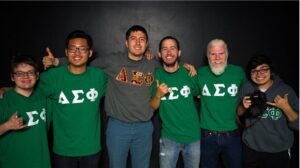 Within FJMC International, we talk often about brotherhood. Not the nostalgic kind that belongs to locker rooms or college fraternities, but the mature, accountable, heart-centered brotherhood that says: I see you. I’ve got you. Let’s build together.
Leadership, in that light, becomes less about hierarchy and more about belonging. It’s not a ladder to climb; it’s a circle to join – a circle of men committed to one another’s growth and to the flourishing of the communities we serve.
Too often, organizations talk about leadership in the language of sales—benefits, incentives, opportunities. But this isn’t about selling anything. The invitation to lead is not a marketing pitch; it’s a call to relationship.
When we invite men to take on leadership, we’re not promising ease or comfort. We’re offering purpose. We’re offering the chance to wrestle with the same questions that have defined every generation of men who sought meaning in community: How do I balance responsibility with joy? How do I live a life of service without losing myself?
These are ancient questions dressed in modern clothes. And they’re best answered together, not alone.
So when a new leader asks, “What am I getting myself into?” I’d answer this way:
You’re getting yourself into conversations that will stretch you. Into friendships that will sustain you. Into the practice of showing up for others and being shown up for in return.
You’re getting yourself into something older than you and larger than you—a tradition of men who, across generations, have gathered not just to build institutions, but to build each other.
Leadership in FJMC International—and, really, in any community worth your time—isn’t about meetings or motions. It’s about men learning, once again, that brotherhood is both our inheritance and our task.
We can’t promise it will be easy. But we can promise it will be real. Because what you’re getting yourself into is not an organization—it’s a circle of purpose, of service and of friendship that will give back as much as you give, and sometimes more.
Rabbi Noam Raucher is executive director of FJMC International
Need technical or website help? Email us at
Copyright © 2026 FJMC International. All rights reserved. Website designed by Addicott Web. | Privacy Policy