



By Dr. Steven Mandel
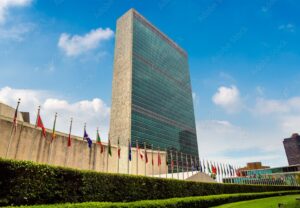
 On Nov. 1, 2005, the General Assembly of the United Nations established International Holocaust Remembrance Day to be commemorated every year on January 27. It is a day to recognize the 6 million Jews murdered in the Holocaust, along with countless members of other minorities, and to encourage the development of educational programs to prevent future acts of genocide. And it rejects denial of the Holocaust as an event and condemns all manifestations of religious intolerance, incitement, harassment or violence against persons and communities based on ethnic origin or religious beliefs.
Past speakers at the U.N. on this day of remembrance have included the secretary-general of the U.N., the president of Israel, Holocaust survivors, ambassadors and Roma Holocaust survivors, accompanied by prayers and music written and performed during the Holocaust.
“Never Again” is a common theme that is addressed on this day, reminding us all of the dangers of extremism, such as antisemitism and extreme ideologies, and serving as a warning to be vigilant and to act when hate arises around the world. If antisemitism remains unchecked, it inspires others to join, normalizes prejudice and escalates discrimination into harassment and violence.
On this day, we honor survivors and liberators, as we learn about how and when the Holocaust happened, and reflect on our common humanity. In Israel, this day plays a role in Jewish identity as a justification for Israel’s existence and a general lesson against racism and ethnic persecution.
 (For a schedule of events this year, click here.)
A rabbi will chant El Malei Rachamim, the central prayer of the dead, honoring G-d’s greatness, and asking for the souls of the departed to be recalled with deep reverence. It emphasizes remembrance, healing, bearing witness and honoring the 6 million Jews who perished in the Holocaust. It further affirms our resilience in the face of violence perpetrated against us and the harassment that causes us trauma.
For many of us, the event will recognize our multigenerational trauma, the effects of which can be emotional, psychological or biological, and which is passed from one generation to the next, impacting decedents who did not directly experience the original event. We may experience symptoms of Post-Traumatic Stress Disorder (PTSD), with anxiety, hypervigilance, emotional dysregulation, relationship issues, self-esteem, substance abuse, depression and a heightened stress response. Altered family dynamics and epigenetic changes that can accompany feelings of systemic oppression often present themselves. There can be a conspiracy of silence, forcing children to absorb the unspoken emotional burden, which can result in the use of their imagination to relate to the past. We can also experience pride and resilience and a deep connection to our Jewish identity, giving us a sense of strength and purpose for future generations.
Each year, the U.N. program includes music from the Holocaust, reflecting expressions of humanity in inhuman conditions. It helps people escape reality and gives voice for the yearning and symbol of freedom in our search to find comfort and hope. It gives prisoners consolation, support and confidence, and it reminds them of their earlier lives. It serves as a form of protest, as a way to maintain dignity under the most difficult of circumstances.
In the past, the Czech opera has been performed at this commemoration by the children of the Terezin concentration camp, and songs composed in concentration camps – where prisoners were forced to play when the trains arrived – were also performed.
There was also humor in the camps. Victor Frankel said “humor was the sole weapon in the fight for self-preservation.” At Yad Vashem, in Israel, it is written “without humor, we would have committed suicide.”
 Many speakers have addressed Holocaust denial and the increase in antisemitism, surmising that it likely correlates with a growing ignorance of the Holocaust. Questions have arisen as to what will happen when all the witnesses are dead. So in response, on Jan. 22, 2022, the U.N. approved an Israeli Resolution to Condemn Holocaust Denial.
The core principle of this U.N. commemoration is to confront hatred and turn memory into an ongoing moral responsibility. This includes the testimony of survivors who speak about more than their own suffering and people who have no graves; they connect each of us with the ongoing danger of racism, xenophobia and group-targeted violence.
Israeli President Isaac Herzog described two undeniable truths:
He further indicated that the Jewish people have a responsibility and an obligation to defend the legitimacy of the Jewish state.
This commemoration is very important to me personally, with members of my larger family having been murdered at Auschwitz. My very existence is bound with unexplainable loss and astonishing survival. It is part of my identity, my family story and my ethical commitment to ensure people do not forget the Holocaust. The profound trauma of mourning people I never met has shaped my feelings and choices. It expresses my strong personal commitment to Jewish continuity, to Israel’s security and to the fight against antisemitism.
Dr. Steven Mandel is FJMC International’s NGO representative to the United Nations, and vice president of outreach and engagement for FJMC’s New York Metro Region.
Need technical or website help? Email us at
Copyright © 2026 FJMC International. All rights reserved. Website designed by Addicott Web. | Privacy Policy