




By Rabbi Noam Raucher
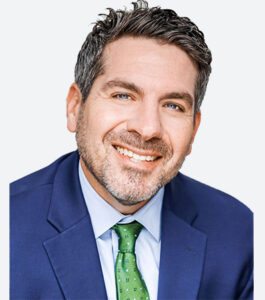
Rabbi Noam Raucher
Mamas’ Boys began as a stubborn question I couldn’t shake: in a world that keeps rewriting the rules — politically, economically, spiritually, socially – what does it mean to be a Jewish man today?
For years, I’ve watched men try to answer that question alone. Some do it by grinding harder. Some by numbing out. Some by hiding behind certainty – work, politics, the “hot takes” that keep the heart safely out of reach. And some, quietly, by longing for language and community: words for fatherhood, partnership, grief, desire, responsibility, doubt. Judaism has always offered language for all of that. Masculinity culture often doesn’t. Mamas’ Boys lives in that gap.
This podcast is a personal passion project of mine, and it’s also an act of creativity from FJMC International. Our work is built on a simple belief: men don’t just need information; we need relationships that make us braver, kinder and more accountable. A podcast can’t replace a circle of men in a room, but it can open the door. It can say: you’re not crazy for feeling disoriented. You’re not alone for wanting better models. And you’re not disloyal to your tradition for asking hard questions about power, belonging and the lives we want to build.

Rob Kutner
None of this would exist without partnership. Rob Kutner – writer, comedian and a mind that knows how to make serious conversations breathe – brought the co-host energy that keeps the show both sharp and humane. And Marlene Sharp and Grace Fraga of Pink Poodle Productions helped us turn a pile of ideas into something real: recorded, edited, scheduled, polished and ready for listeners who deserve quality.
We launched with guests who set the tone: actor Joshua Malina (The West Wing, Scandal), Israeli author and poet Etgar Keret, writer/director Salvador Litvak and actor Mark Feuerstein from Royal Pains and Guns & Moses, Colorado Governor Jared Polis and journalist and CNN anchor Jake Tapper. These aren’t “celebrity interviews.” They’re conversations with people who carry public lives – and still wrestle with private questions.
Across those first five episodes, we talked about fatherhood – not as a sentimental category, but as a daily practice of presence, repair and humility. We explored Jewish warriorship: what it means to be strong without becoming brutal, committed without becoming fanatical, protective without being possessed by fear. We spoke about gender roles and changing expectations – how many of us were trained for a world that no longer exists, and how liberating (and scary) it is to admit we need new skills. We asked what values can guide men when old scripts collapse, and what men actually want from politics besides permission to be angry.

Joshua Malina
The deeper reason for the show is this: men are starved for meaning, but surrounded by cheap substitutes. The algorithm offers outrage. The culture offers status. The marketplace offers purchases. None of that is a compass. Judaism, at its best, is a compass: dignity earned through responsibility, holiness practiced through attention, repentance made real, community treated as essential. When those ideas meet honest conversation about masculinity, something opens — room to grow without shame, room to disagree without contempt, room to repair when we fail, room to tell the truth about our inner lives.
That’s the heartbeat of Mamas’ Boys: candid dialogue at the intersection of Judaism, masculinity and manhood, with humor where humor helps the truth land. The title is playful on purpose. It disarms the posturing. It reminds us that behind every performance of manhood, there’s a boy who learned something – often from his mother, sometimes from his father, always from his environment – about what love costs and what strength looks like.

Marc Feuerstein
All episodes are available on YouTube, iTunes/Apple Podcasts, Spotify, Google Music and Podbean. And we’re just getting started. Coming up, we’ll go deeper into mental health, parenting, equity and allyship, relationships, sex and sexuality, pornography, ritual and the everyday spiritual practices that can keep a man from becoming either a stone or a storm.
If you’ve ever felt like Jewish manhood is either a punchline or a problem, this podcast is for you. If you want a tradition strong enough to hold your tenderness and your backbone at the same time, this podcast is for you. And if you’re ready to trade performance for presence – welcome.

Jake Tapper
Our hope is that every episode becomes an on-ramp into what FJMC International is built to offer in real life: Friendship that’s more than hanging out, Judaism that’s more than labels, Mentorship that helps you grow instead of posture, and Community that shows up when it counts. This vision is generously funded by Foundation for Jewish Life, whose support helps turn big questions into real, accessible resources. We’re grateful to the Foundation for believing that strengthening men strengthens families – and strengthens Jewish community. Press play, and come sit at the table with us – on the first Thursday of every month.
Rabbi Noam Raucher is executive director of FJMC International.
Need technical or website help? Email us at
Copyright © 2026 FJMC International. All rights reserved. Website designed by Addicott Web. | Privacy Policy