




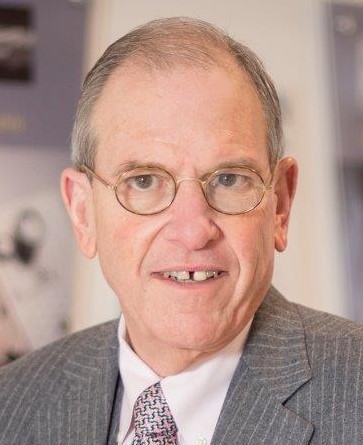
By Tom Sudow
You’ve been there. Admit it — you’ve been there.
You buy the toy, and on the side of the box are those three fateful words:
“Some assembly required.”
 Or someone says, “Let’s buy the bookcase from IKEA. How hard could it be?” Some assembly required.
As we enter the final five parshiot of Exodus, aside from the episode of the Golden Calf, we find ourselves in the middle of what feels like a detailed instruction manual for building the portable Mishkan — the traveling sanctuary. Page after page of instructions. You can almost see it stamped across the Torah:
Some assembly required.
There was nothing on my résumé, or in my prior life experience, that suggested I was qualified for such a task.
On Memorial Day weekend in 1983, we purchased a wooden swing set for my young daughter. To save $50, my wife Michele suggested that I assemble it myself. There was nothing in my background to indicate I was up to this monumental project — and I needed to complete it before a family barbecue just a few hours later.
I opened the box that fateful Sunday morning and saw pages and pages of instructions.
You’ve been there.
Insert Part A into Part B. Fold Part B to reach Part C. Connect D, E, and F — then attach to C.
The real challenge? You have no idea what A, B, or C actually is.
After enlisting several relatives and about 12 hours of effort, the swing set was nearly assembled. And that swing set stood for 39 years. But more important than the swing set was what happened while building it. As relatives pitched in, we became a community with a mission. (Okay, the mission was to get to dinner.) But we pulled together, each taking on tasks.
Years later, after our youngest son was born, my in-laws and I took our daughter and older son to Kiddie City so they could pick out a toy. My daughter chose a Barbie van — proudly labeled: Some assembly required.
 This time, I had a ringer: my father-in-law, who had just built an addition onto his house — and I don’t mean he called a contractor.
We opened the box. Spread out what seemed like 100 pieces. Studied the instructions. Hours passed. Each time we thought we were finished, there were still 20 pieces left on the floor.
Late into the night, we declared the van complete. I’m not sure it was roadworthy for Barbie and Ken — there were still 16 parts that never found their rightful place — but for a six-year-old, it was perfect.
We’ve all experienced it: some assembly required.
So why does God give us such detailed instructions for building the Mishkan? What is the message here — beyond “don’t buy things that say some assembly required”?
The Torah tells us the purpose: “They shall make Me a sanctuary that I may dwell in their midst.”
The mystics point out something fascinating. The verse does not say, “that I may dwell in it,” but “in their midst.”
God does not dwell in the building — but in the builders. Not in the structure — but in the hearts of those who construct it.
After all, the destruction of the First and Second Temples did not end God’s presence among us. We built synagogues — vehicles for sacred space. But there is nothing inherently holy about a building.
Look around this room. It becomes holy because we gather here. Because we pray here. Because we learn here. If the weather were better, we could hold services outside in the courtyard. The courtyard has hosted receptions and services. This room has held concerts, speakers and prayer.
It is our intentionality that makes space sacred.
Micha Goodman notes that in Exodus, when the Mishkan is completed, the cloud covers the Tent of Meeting and God’s presence fills it — so much so that Moses cannot enter.
Yet in Deuteronomy, when Moses retells the story, there is no mention of God entering the Tabernacle. The emphasis shifts. Even King Solomon, when he builds the First Temple, declares that the Temple cannot contain God.
So why does the Torah devote so much space to the Mishkan?
Because the story is not about the building. It is about the builders.
Let’s recap Exodus so far. God performs miracles. The people complain. As my son once put it in his Bar Mitzvah D’var Torah: it was M&Ms — Miracles followed by Murmuring.
The people were physically freed from slavery — but not emotionally. They saw God as a provider, and they complained about the menu, the water, the conditions.
Then something changes.
They are asked to contribute voluntarily. From being slaves — to becoming volunteers. They donate so much that Moses has to tell them to stop. Perhaps the only Jewish building campaign in history that ended because there was too much giving.
They volunteer their skills. They are not paid. The spirit moves them.
And during the construction? The complaining stops.
Why?
Because they now share a purpose. They are no longer passive recipients. They are partners. They are builders.
The Mishkan was not just building a sanctuary. It was building a community.
Rabbi Jonathan Sacks wrote about the distinction between state and society. The state is what is done for us by government. Society is what we do for one another — through volunteering, associations and community.
Exodus, he suggests, is about the birth of society.
Now compare the Torah portion with the Haftarah. The Mishkan was built by volunteers — by a free people. But when Solomon builds the First Temple, it is through forced labor. Thirty thousand men are conscripted. It breeds resentment and ultimately rebellion.
The Mishkan united. The Temple divided.
Over 100 years ago, synagogues were primarily places of prayer. People rushed in and rushed out. To build community, Men’s Clubs were formed. They created friendship, connection and belonging.
In the 1980s, when many could no longer read prayerbook Hebrew, the Federation of Jewish Men’s Clubs created the Hebrew Literacy Program — teaching over 250,000 people to read Hebrew.
They created the Yellow Candle Program to preserve Holocaust memory in homes across North America.
They developed the Art of Jewish Living series to make Judaism accessible in the home.
They created Keruv initiatives to welcome interfaith families.
They created safe spaces for men to share, to grow, to support one another.
But Men’s Clubs also understand that the world is rapidly changing. What drew men to a Men’s Club — or even to a synagogue — twenty years ago is not necessarily what speaks to them today. And if we are serious about building community, we cannot simply preserve yesterday’s model and hope it will sustain tomorrow.
We must build again.
Just as in the wilderness, the Mishkan did not descend from heaven fully formed. It required vision. It required courage. It required people willing to step forward and say: I will help assemble this.
Today we stand at a similar moment.
 Led by innovative congregations such as B’nai Jeshurun, new pathways are emerging. J-Men initiatives are engaging younger men — meeting them where they are, not where we wish they were. Creating authentic men’s communities — even for those who are not yet synagogue members.
Because belonging must precede affiliation. Because connection must come before commitment.
And in that same spirit, the FJMC — which for 95 years stood for the Federation of Jewish Men’s Clubs — has embraced an expanded and visionary identity. Through an effort led by our own Jerry Brodsky, it now reflects a broader mission and has changed its name to FJMC International – Friendship. Judaism. Mentorship. Community.
Those are not just words. They are a blueprint.
Friendship — that is lifelong and rooted in meaningful experiences
Judaism — that is pluralistic and joyful
Mentorship — that is loving and wise
Community — that is inclusive and supportive.
Check out our new podcast Mamas’ Boys to see how things are changing. Hear from Joshua Malina and Jake Tapper in the first two installments.
Just as God saw the need to transform a group of freed slaves into a sacred society, Men’s Clubs continue that sacred work today — building spaces of safety, purpose, service and belonging.
The work of assembly is not finished.
It never is.
And that is not a burden — it is a blessing.
“Some assembly required” is not a warning. It is an invitation.
It is dozens of people in a kitchen preparing cholent. It is volunteers setting up chairs. It is people showing up.
Sheila Balk and Murray Berkowitz were about community — bringing people together. Richard Berkowitz continues that legacy. As Elizabeth Andrew said: “Volunteers do not necessarily have the time; they have the heart.”
Today we celebrate very large hearts.
The lesson of the final five parshiot of Exodus is simple: a free people survives only when it builds community. Freedom alone is not enough. Volunteering transforms individuals into a people.
It’s not about “some assembly required.” It’s about what we are assembling.
We are assembling community.
Muhammad Ali may have put it best: “Service to others is the rent you pay for your room here on earth.”
Shabbat Shalom.
Tom Sudow is a past-president of FJMC International.
Need technical or website help? Email us at
Copyright © 2026 FJMC International. All rights reserved. Website designed by Addicott Web. | Privacy Policy