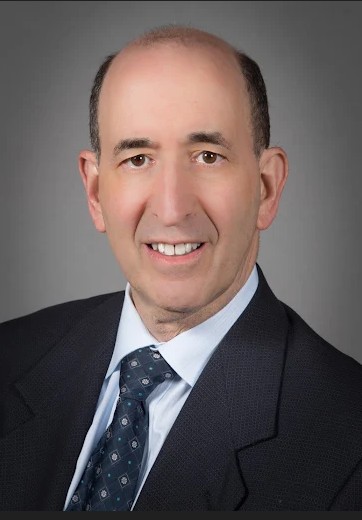
by Steven Mandel MD Clinical professor of Neurology Hofstra Northwell Adjunct Professor of Medicine NY Medical College
Dave is a Shabbat buddy, a friendly presence, who I would often see and spend time with on Shabbat. We sat together in Shul and kiddish for many years. It was the summer, he wasn’t at services, but I thought he was on vacation. After a few weeks, I called his home, and his wife told me he’d had a stroke. When I asked to speak with him, she said he’d been left with an “expressive aphasia,” that he was having difficulty retrieving words and producing spoken language, but had relatively preserved understanding.
His wife said he faced moments of deep despondency, searching for a way to express his thoughts and emotions. During his stay in a rehab hospital, he was introduced to art. What began as a tentative mark on paper became his powerful language of resilience, courage and strength, not only allowing him to communicate, but to build confidence, purpose.
The art therapist helped Dave establish emotional expression without language. Over time he improved motor skills, building visual spatial organization. Drawing Jewish objects like a Star of David, a Mezuzah, and candles, he used symbolic thinking as his expression to communicate. With art, he was able to express his personal experience, rebuild his identity and build mastery and autonomy.
Over time, art became more than a creative outlet. He discovered a sense of worth and agency. His art gave him a sense of pride, a way to be heard, and helped him see himself not as someone defined by loss, but rather for his ability to adapt and grow. His artistic creations were his expressions of connecting with others.
Sharing his work with members of his FJMC men’s club was tangible proof that he was still capable and gave him a sense of dignity and self-respect. His FJMC brothers recognized his expression beyond words. They encouraged him to share his art as a testament to his perseverance. He helped others learn that in the presence of adversity one can transform isolation into connection, and despite struggle, into shared strength.
Members of his club had concerns, worry and sadness about his ability to recover. Over time, they learned how to recalibrate how to communicate and engage with him. Over their initial fear, that this could happen to them, it led to respect and admiration, with stronger bonds, and closer emotional connections.
Dave’s family felt a deep, powerful pride in his accomplishments. From their journey of fear and grief, they arrived at a place to view his courage, persistence, emotional bravery, and survival, not just as a skill but as a source of profound pride and love.
From a personal perspective, my ability to comfort Dave, and others, seems to have made me more honest, grounded in Jewish values of chesed and responsibility We can then show up as a community that will not them fail. Our “presence “matters, so when the next crisis comes, no one will face it alone.
Art supports brain health, emotional regulation, empathy, resilience and lifelong cognitive function. It activates nonverbal outlets for anxiety, depression, burnout and post-traumatic stress disorder. It lowers cortisol to reduce stress, and trauma informed coping skills. Art inspires us, its transformative and empathy producing. It can create cognitive shifts by challenging our perceptions to better understand our place in the world. Art helps us explain our creativity and express ourselves in unique ways. Art moves us to feel something and tell stories. It helps us experience sorrow and joy and brings people together.
In Dave’s case, his art was his expression of emotion, where he was most able to communicate his feelings and thoughts. His art taught us that we could communicate where words might not, layering symbolism with meaning. His drawings resonated and inspired us to tell our own stories. When his body faltered, his art healed places the illness could not reach.
In conclusion: Through art, he connected to his Jewish faith by transforming creativity into a form of avodah – sacred work and spiritual expression beyond speech. Sharing his work with his men’s club gave the process of communal meaning, reflecting the Jewish value of kehillah (community) and mutual support. The encouragement and recognition he received strengthened his sense of belonging, turning each finished object into both a spiritual affirmation and shared symbol of resilience and recovery.
Steven Mandel MD Clinical professor of Neurology Hofstra Northwell Adjunct Professor of Medicine NY Medical College March 1, 2026