




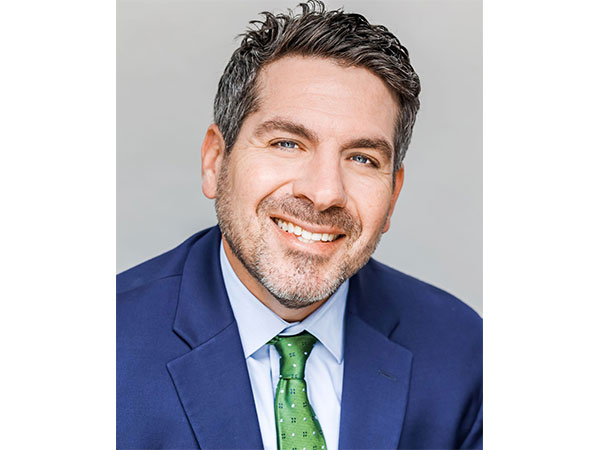
By Rabbi Noam Raucher
Dr. Robby in the HBO Max medical drama “The Pitt” is the kind of man our culture still too often mistakes for healthy.
He is capable, respected, decisive and endlessly useful. He is the senior doctor everyone else leans on, the man who absorbs chaos without flinching. But that is also what makes him such a devastating figure.

As the season goes on, it becomes clear that what looks like strength is also suppression: grief pushed down, panic managed in real time, trauma dressed up as professionalism. By the end of Season 1, we learn that the shift is taking place on the anniversary of the COVID death of his mentor, Dr. Adamson – a loss Robby still blames himself for.
Eventually the mask fails. He breaks down in the pediatric room, then later ends up on the hospital roof, nearly going over the ledge. The show’s point is not subtle: a man can function brilliantly while falling apart internally.
That is the lie at the heart of modern masculinity: that a good man carries everything alone. He does not burden others. He does not complain. He does not need help. He keeps moving, keeps working, keeps providing, keeps performing. And if something inside him begins to crack, he calls it stress, or exhaustion or just a rough week. Anything but suffering.
Men are still taught that as long as they remain functional, they are fine. But functionality is not wellness. It is entirely possible to keep showing up for everyone else while disappearing from yourself.
That lie is not making men stronger. It is making them unreachable.
The Jewish tradition offers a far wiser vision of manhood. In Genesis, God says, “It is not good for humans to be alone.” That line is often flattened into a comment about partnership, but it is also a statement about human design. Isolation is not the ideal. A man cut off from reflection, support and honest relationship is not spiritually advanced; he is endangered. The tradition begins not with masculine self-sufficiency, but with a warning about loneliness.
And the Bible’s men are not presented as invulnerable machines. Elijah, one of the fiercest prophets in Jewish memory, collapses under a broom tree and asks God to take his life. The text does not erase his despair to preserve some fantasy of heroic masculinity. It leaves it there, on the page, because truth matters more than image. The Jewish tradition understands something our culture often does not: there are moments when a man’s exhaustion becomes so deep that he can no longer think his way out of it alone.
That is why Jewish life builds practices against inner collapse. Shabbat teaches that a person is not a machine. Cheshbon hanefesh—an accounting of the soul—insists on reflection rather than avoidance. And pikuach nefesh, the obligation to preserve life, makes clear that life itself takes precedence over almost everything else. If preserving a life overrides so much in Jewish law, then mental health cannot be treated as some optional side issue. A mind in torment is not a minor problem. It is a human emergency, even when no one else can see it yet.
This should appeal far beyond the Jewish world because the truth underneath it is universal. Men need practices that interrupt isolation. Men need language for grief before it hardens into rage. Men need friendships where honesty is possible, rituals that force rest, and the humility to admit when the burden has become too heavy. Therapy, prayer, exercise, medication, journaling, support groups, trusted friends, real sleep, spiritual direction—these are not signs that a man is failing. They are signs that he is trying to remain human.
What makes Dr. Robby so resonant is that many men recognize themselves in him. Not the hospital, necessarily. Not the trauma bay. But the posture. The constant holding. The need to be the one who knows, the one who steadies, the one who never becomes the problem. And then, eventually, the collapse that comes when old grief has been left untreated for too long. His breakdown at the end of Season 1 is not just about one terrible shift. It is about what happens when a man spends years confusing endurance with healing.
Mental Health Awareness Month should say something plain to men: you were never meant to carry all of this alone. A good man is not a man with no wounds. He is a man honest enough to tend them before they become everyone else’s inheritance. This month, choose one concrete act of care—make the therapy appointment, call the friend you’ve been avoiding, start the walk, or tell one trusted person the truth about how you are actually doing. Awareness means very little unless it becomes practice, and practice is how a man begins to carry his life with greater honesty, steadiness and hope.
Rabbi Noam Raucher is the executive director of FJMC International.
Need technical or website help? Email us at
Copyright © 2026 FJMC International. All rights reserved. Website designed by Addicott Web. | Privacy Policy