



By Jay Givarz
Temple Beth Shalom in Palm Coast, Fla., was originally part of United Synagogue of Conservative Judaism in 1973 – but drifted to being independent over the past 50 years, with a mix of Conservative, Reform and unaffiliated rabbis.
Suffice to say, with just about 65 member families, the congregation did what they could afford to do in survival mode.
Temple Beth Shalom had a very active brotherhood; however, it functioned exclusively as a work force for a small synagogue with a minimal facilities budget.
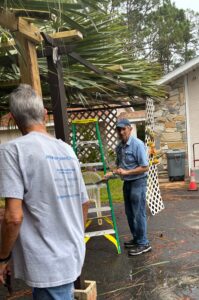
Putting up the shul sukkah
The Men’s Club worked the kitchen in concert with Sisterhood, made small building repairs, mowed the grass, maintained the grounds, handled painting projects, and set up and took down tables and chairs. There also was a mix of fundraising activity, with a big Purim Raffle and other events staged during the year.
What our club missed was Jewish programmatic depth.
In 2022, I assumed the presidency of the group at Temple Beth Shalom with the understanding that I was going to transform it into a full-fledged Men’s Club. This was based on my prior experiences as a Men’s Club president at Congregation Etz Chaim in Marietta, Ga.(trained and guided by some of the finest leaders), and my previous work as executive director at synagogues and as Hillel administrator earlier during my non-profit professional career.
My belief – being born into a small-town synagogue with my brother, Mark, in rural Maryland, and now back years later at another small-town synagogue – is that small shuls can be mini-powerhouses with their Sisterhoods and Men’s Clubs. That’s because, frankly, there is little to no other Jewish competition or social activities in smaller communities. A good example: How may shuls can point to achieving 50% attendance for a Shabbat without a special-event component? Yet this is not hard to accomplish with just 65 families in our community.
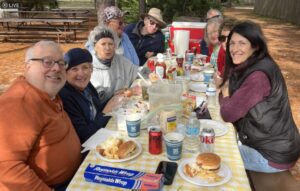
Beth Shalom picnic at the Florida Agricultural Museum
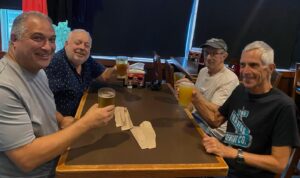
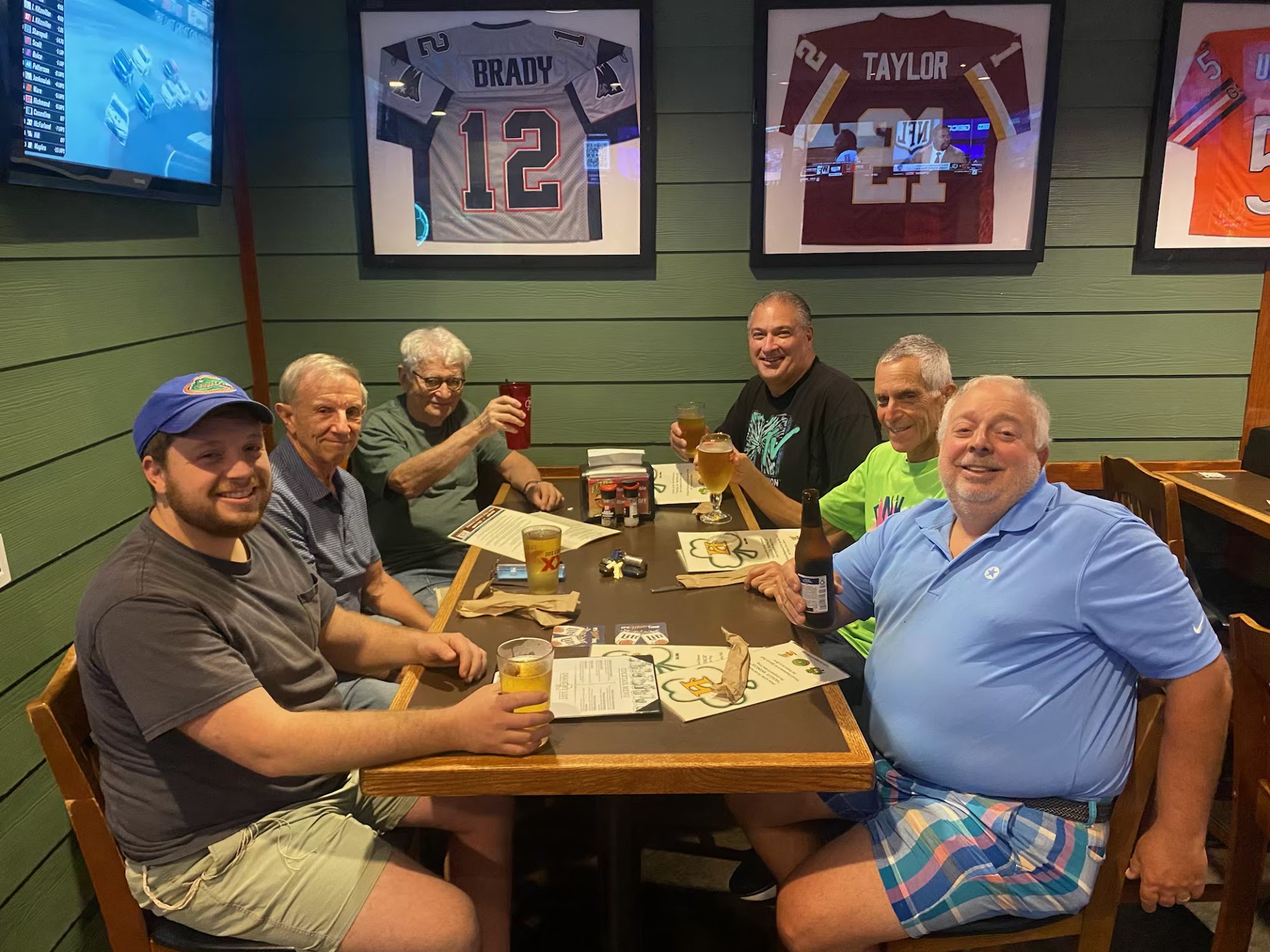
Beth Shalom Men’s Club’s Grounds, Tables & Suds, at Houligans
There are many small “volunteer”-style shuls across the U.S. and Canada, usually in smaller towns. But there are also many newly-formed groups who do not have the professional assistance of larger shuls but still seem to be eager to get the opportunity to belong to something larger with enhanced programming opportunities.
Following our club’s Zoom call with FJMC’s leadership, we voted to join FJMC International in 2023. One of our members, Jonathan Hubbert, said, “We’re joining the big leagues,” as another, Dr. Harry Goldschein, volunteered to pay the club’s initial FJMC dues.
Now, our Temple Beth Shalom’s Men’s Club, along with Congregation B’nai Torah Men’s Club in Ormond Beach that was started by my brother, Mark, is actively planning the upcoming Central and North Florida Area Shabbaton from February 20-22 in Palm Coast. My inspiration came from the weekend of the Ramah Darom Retreat at Camp Ramah in February 2025, which I still attended with my long-time Ramah Darom colleagues.
We are looking forward to being a leader to this “smaller club” retreat initiative, which can bring a greater sense of Jewish community to the smaller towns and the new “x-burbs,” which I believe are even further out than the suburbs. Families are moving out from the city centers for more privacy, smaller schools and more space for remote work or partially remote work.
We are proud that our chapter at Temple Beth Shalom in Palm Coast maintains and drives the lawn tractor among many other things that brings us together. Now, we’ll do it with more spirituality, as well as a D’var Torah before every meeting.
See related stories about the Florida Region and Congregation B’nai Torah Men’s Club in Ormond Beach.
Jay Givarz is president of Temple Beth Shalom Men’s Club in Palm Coast, Fla.
Need technical or website help? Email us at
Copyright © 2026 FJMC International. All rights reserved. Website designed by Addicott Web. | Privacy Policy