



By Dr. Steven Mandel
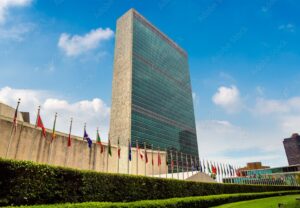
The United Nations holds a lot of meetings and conferences, on a wide range of subjects. One such even was the U.S. Conference on Religion, Pluralism and Human Rights, held at U.N. Headquarters in New York City in January, and which I attended.
Its mission is to promote tolerance, prevent incitement to violence based on religion, and protect freedom of religion or belief. The international conferences on plurality, religion and human rights seek to advance dialogue, understanding and cooperation among diverse religious, cultural and social communities. 
Religious pluralism as defined by the U.N. includes coexistence and freedom of thought, conscience, religion or belief – a public legal order that does not use “state religion” or “doctrinal secularism” to restrict space for diverse religious or belief expressions.
Security doesn’t entail erasing religion from society. Rather it creates conditions for pluralistic coexistence, where different beliefs can contribute to the common good.
The U.N. combines research scientists, policy makers and industry to collaborate and develop educational programs, followed by action across the world. The U.N. promotes peace, protects minority rights and strengthens democratic values, to build a more just, inclusive and respectful world.
For FJMC International, this creates a spiritual and practical mission: to strengthen Jewish identity while actively promoting respect, inclusion and justice within Jewish communities and the broader society.
The U.N. just celebrated The World Interfaith Harmony Week (Feb 1-7). It was adopted by the U.N. in 2010, and calls for Muslim and Christian leaders to engage in dialogue based upon two common fundamental religious commandments: Love of G-d, and Love of thy Neighbor, without compromising their own religious tenets. Added recently is Love of the Good, to include all people of good will, of other faiths or no faiths. It is hoped that this is a focal point from which all people of good will outweigh the differences and provide a strong dosage of peace and harmony to their communities.
Religious discrimination does not begin with violence. It begins with symbolic exclusion when certain beliefs are treated as irrational or dangerous. It can even happen in the same tradition. What is new and creative can lead to tension and discomfort. It can bring communities closer together, but it can also creation polarization. We need to have religious dialogue to discuss our personal beliefs and how we interact with the community.
Religious freedom goes hand-in-hand with respecting equality, freedom of expression and freedom of association with other religions. Various viewpoints need to be respected, everyone included, to ensure that various viewpoints do not discriminate and create hate. Social and intercultural engagement can be fostered by interfaith weekends that bring together possibilities, and strengthen values, based on social cohesion.
Here are five Ethical Principles that confront hate and religious persecution:
Plurality, religion, and human rights connect to a separation of church and state – a concept that is considered constitutional architecture. In the United States, separation of church and state is a legal mechanism to prevent government from establishing a religion of one faith, thus protecting religious liberty for all. That ensures equal access to civil rights, public services and civic status regardless of belief. The U.N. human rights law supports separation of church and state powers, with a guiding principle of neutrality and nondiscrimination, without the promotion of any religion. Jewish organizations argue that separation of church and state is “indispensable” to religious liberty, protects minority faiths, and fits well with Jewish commitments to equality, justice and democratic participation.
FJMC International’s statement against hatred, bigotry, discrimination and racism invokes tzelem Elohim, and commits the organization to foster environments where diversity is celebrated and differences are respected.
This reflects our core values and public missions, especially within Jewish civic and interfaith advocacy. We need to work together to replace fear with understanding, hatred with compassion, and persecution with justice. Our FJMC Inclusion Resource Guide urges clubs to integrate people with mental and physical challenges into regular services, youth activities and leadership roles, not just special programing. We commit ourselves not only to statements but to sustained action – educating ourselves and others, adopting and implementing inclusion and anti-hate policies, and mobilizing our clubs to be places where every person feels safe, respected, empowered and able to thrive in mind, body and spirit.
Dr. Steven Mandel is FJMC International’s United Nations NGO representative, and vice president of outreach and engagment for FJMC’s New York Metro Region.
Need technical or website help? Email us at
Copyright © 2026 FJMC International. All rights reserved. Website designed by Addicott Web. | Privacy Policy