




By David Rozenson and Jerry Brodsky
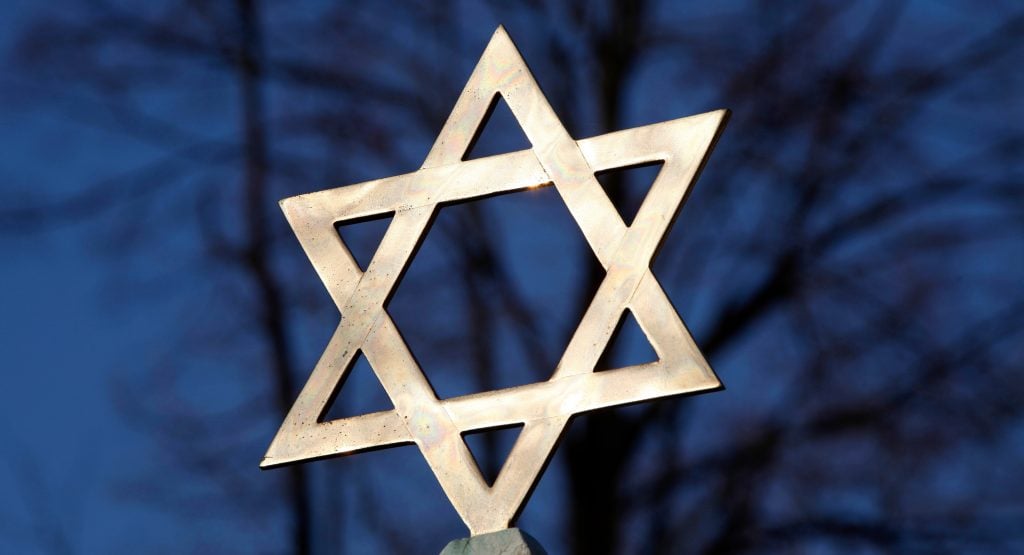
Be Pro-Semitic! FJMC International is taking a different approach to combating antisemitism. We are promoting Judaism and why you should be proud to be Jewish!
Camille Pissarro
CAMILLE PISSARRO
Camille Pissarro (1830 – 1903) was an Impressionist and Post-Impressionist painter who was a pivotal figure in the Impressionist movement. He was also Jewish.
Born on the island of St. Thomas to parents of Portuguese Jewish and French Jewish ancestry, he is regarded as the “dean of the Impressionist painters,” not only because he was the oldest of the group, but also “by virtue of his wisdom and his balanced, kind, and warmhearted personality.”
Paul Cézanne said, “He was a father for me. A man to consult and a little like the good Lord.”
Pissarro was also one of Paul Gauguin’s masters, and Renoir referred to his work as “revolutionary.”
Pissarro is the only artist to have shown his work at all eight Paris Impressionist exhibitions, from 1874 to 1886. He was a mentor to Claude Monet and Edgar Degas, acting as a father figure not only to the Impressionists but to all four of the major Post-Impressionists: Cézanne, Seurat, Gauguin and van Gogh. He lived much of his life in Paris, as one would gather enjoying the scenes he painted.
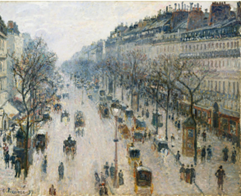
“The Boulevard Montmartre,” by Camille Pissarro
This article was sourced from:
National Gallery of Art. https://www.nga.gov/artists/1791-camille-pissarro
https://www.britannica.com/biography/Camille-Pissarro/The-Impressionist-years
Adam Gopnik, How Camille Pissarro Went from Mediocrity to Magnificence (The New Yorker, Dec. 25, 2023).
Rewald, John (1989). Camille Pissarro. Harry N. Abrams.
Clark Art Institute: Pissarro’s People—About the Artist. https://www.clarkart.edu/microsites/pissarro-s-people/about-the-artist
Michael Janofsky, A Man Behind Impressionism Gains Favor in Denver. New York Times Oct. 18, 2025.
Milwaukee Art Museum https://blog.mam.org/2015/08/25/from-the-collection-vegetable-market-at-pontoise-by-camille-pissarro/
LISE MEITNER
In the Periodic Table of the Elements, there are two elements named after women scientists.
The namesake of Curium is well known, after eminent scientist Marie Curie and her husband, Pierre, who were known for their research on radioactivity, and their discovery of the elements radium and polonium.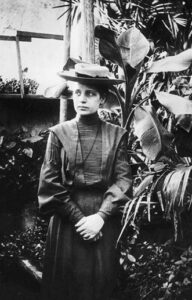
But the other scientist is unjustly obscure– Austrian-born Jewish physicist Elise “Lise” Meitner, who overcame both the gender discrimination in academia and the antisemitism of Nazi Germany to make critical contributions in nuclear physics, including the discovery of the Meitner-Auger Effect and, most notably, discovering and identifying the process of nuclear fission.
Overcoming the barriers to women in universities, she became the first woman to become a full professor of physics in Germany. Her early work was conducted at the University of Berlin, but when she lost her position under the Nuremburg Laws in 1935, she continued her scientific work in Sweden and England.
In 1939, she and fellow physicist Otto Robert Frisch worked out the physics of nuclear fission through a new interpretation of earlier experimental data of her colleague Otto Hahn. It was in Meitner and Frisch’s report in the February 1939 issue of Nature that they gave the process the name “fission.” This discovery led to the harnessing of nuclear power.
Though nominated 39 times for the Nobel Prize in physics and chemistry, she never received the award. However, in 1994, she was memorialized on the Periodic Table when Meitnerium (atomic no.109) was named in her honor.
This article was sourced from:
Her article on nuclear fission: http://www.nature.com/physics/looking-back/meitner/index.html
The Woman Behind the Bomb by Marcia Bartusiak https://www.washingtonpost.com/wp-srv/style/longterm/books/reviews/lisemeitner.htm
Nominations for Nobel Prize: https://www.nobelprize.org/nomination/archive/show_people.php?id=6097
UCLA Archive: “Contributions of 20th-Century Women to Physics” ">http://cwp.library.ucla.edu/Phase2/Meitner%
David Rozenson is a lawyer, writer and member of Temple Emanuel in Newton, Mass. Jerry Brodsky is chair of FJMC International’s Inclusion Committee and editor of its “Pride & Prejudice” online magazine, as well as president of the International Region.
We’re proud of the contributions Jewish men and women have made to our world! If you have a nomination and information about their contribution to our world, send your submission to j.
Need technical or website help? Email us at
Copyright © 2026 FJMC International. All rights reserved. Website designed by Addicott Web. | Privacy Policy