




By Jerry Brodsky
 Maybe U.S. Patent No. 2,612,994 doesn’t mean much to you. Nor, perhaps, should it – at least not by its number.
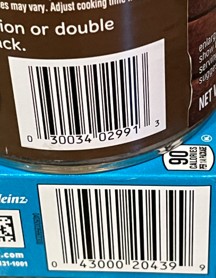
But have you ever seen or used a bar code?
You can thank two Jewish-Americans, Norman Joseph Woodland and Bernard Silver, for developing the first optically scanned bar code, patented in 1952.
You may not remember before bar codes, but one had to trust that the cashier punched in the correct price when you made a purchase. Stores constantly had to inventory their goods to track their shelf-stocking needs. Hospital personnel treating you had to write down what services and medications they provided you for billing purposes. And babies didn’t have bar code bracelets that identified which new parents they belonged to!
But that’s not all, because creation of the bar code didn’t mean it would be widely used.
With respect to the UPC used to process inventory and checkout for goods in almost all retail establishments today, you can thank another Jewish-American, Alan Haberman, who as a supermarket executive saw the potential of the Woodland-Silver invention and campaigned for its universal adoption.
The first item to be scanned for purchase was a pack of Wrigley’s Juicy Fruit Chewing Gum in 1974, by the cashier at Marsh Supermarket in Troy, Ohio.
Today, billions of items are scanned every day around the world thanks to the knowledge, skills, creativity and drive of three Jewish-Americans.
Sources:
Jerry Brodsky is a HaD’Var contributor, and former chair of FJMC’s Inclusion Initiative.
Need technical or website help? Email us at
Copyright © 2026 FJMC International. All rights reserved. Website designed by Addicott Web. | Privacy Policy