On yom tov, when we return the Torah scroll to the ark we chant Psalm 24, which describes
G-d as being עזוז וגבור – izuz v’gibor – strong and mighty and gibor milchamah – גבור מלחמה -mighty in battle.
G’vurah – גבורה – is the noun of this root, meaning power or might. You hear this as we sing during the procession after taking the Torah scroll from the ark. L’cha Adonye hag’vurah, -לך ד הגבורה – G-d, the power is yours The plural is גבורות – g’vurot – as in the second blessing of the Amidah, above.
Now for a little expansion! We have been finding roots to help us unpack the meaning of the prayers. I am going to give you two new keys today. The prefix v’ (sometime va – ו – sometimes u) is everywhere in the siddur. Most of the time, it means and. The suffix cha means you or your.
So, when we chant in the ubiquitous Ashrei – וגבורתך – u’g’vuratecha and u’g’vurat’cha, we are saying and your powers/might.
One of the Hebrew words for man is gever –גבר – the same three letters as our root. (I won’t comment on the fact that linguistically manly = mighty/powerful.) The following quote that is comforting to many people. It is found in Jeremiah and in other forms in some Psalms and it has made its way into the siddur in various places. Blessed is the man/one who trusts in the Lord – ברוך הגבר אשר יבטח ב-ד sometimes -Baruch hagever asher yivtach ba’adonye, It appears in the U’va l”Tzion prayer at the end of Psukei D’zimra (Songs of Praise preceding Shabbat Morning Service) and on Shabbat Minchah. You probably know it best, however, from the conclusion of Birkat HaMazon.
So when you hear gibor, g’vurah, g’vurot, or gever, remember they are members of the same Hebrew family. Once you know the root, you have a powerful start. Until next time, may your curiosity remain gibor, your learning continue to grow, and may we all find new strength by getting to the root of our prayers.
Wishing you many moments of kindness – to give and to receive,
Mollyann




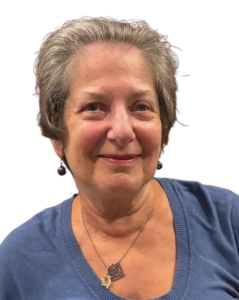 Mollyann Blumenthal is an educator living in the New England Region and she is happy to support FJMC International initiatives to enhance spiritual growth.