




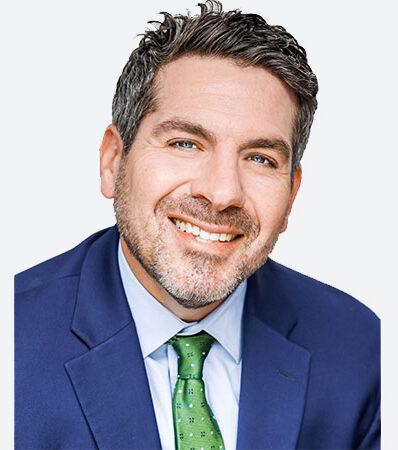
By Rabbi Noam Raucher
Rosh Hashanah is described as the Jewish new year. Yom Kippur is usually explained as a day of repentance. However, ultimately, between both of them we have 10 days to gain perspective on our lives.
For 25 hours, Jewish tradition asks us to step outside the momentum of ordinary life and examine not simply what we have done, but what those choices are turning us into. That’s a necessary question for everyone during this time of year. But, for men, that question feels especially important now.
Psychologist Erik Erikson described the final developmental task of life as a struggle between integrity and despair. In old age, he argued, we look back over the life we have lived and ask whether it coheres. Can we accept our choices, failures, relationships and accomplishments as part of a meaningful whole? Or do we arrive at the end overwhelmed by regret and the painful recognition that there is no longer enough time to become the person we intended to be?
Judaism does not ask us to wait until old age to conduct that assessment. Yom Kippur gives us an annual opportunity to look at our lives from the imagined vantage point of the end.
The useful question, then, is not simply, What did I do wrong this year? It is larger: What kind of man will I have been?
 That question matters because our culture is currently offering men some very different answers about what a successful man looks like. Around the world, the image of the “strong man” has regained enormous cultural and political appeal. Strength is portrayed as dominance, certainty and aggression. The strong man does not apologize. He does not admit error. He humiliates opponents, dismisses criticism, surrounds himself with loyalists and treats compromise as weakness. The warrior posture—the clenched fist, the threat, the swagger, the promise that only one sufficiently powerful man can fix what is broken—has become politically marketable.
The problem is larger than politics. Political leaders succeed partly because they embody qualities that a culture has already decided to admire.
If boys repeatedly learn that strength means never backing down, that winning matters more than truth, that vulnerability is weakness and that accountability is humiliation, we should not be surprised when some of those boys eventually become men who crave power but cannot tolerate correction. Our Jewish tradition offers a strikingly different model.
 Pirkei Avot asks, “Who is mighty?” and answers: the person who can master his own impulses. The measure of strength is therefore not how effectively a man can control other people. It is whether he can govern himself.
That distinction offers a useful starting point for thinking about what Jewish communities might actually contribute to the development of men.
For decades, Jewish institutions have worried about male engagement. We ask how to keep young men involved after bar mitzvah, how to bring them back after college, how to increase synagogue participation or attract them to programs. Those are legitimate organizational questions, but they are not the most important ones.
The deeper question is what kind of men Jewish life is trying to form.
If the goal is a man who can eventually look back upon his life with integrity rather than despair, then integrity cannot simply be admired at the end. It must be practiced throughout life.
It begins with truthfulness.
A mature man needs an allegiance to truth that is stronger than his allegiance to his ego, his political tribe, his employer, his friends or his preferred version of himself. He needs enough courage to recognize when someone is lying to him and enough independence to refuse participation in the lie.
But integrity also requires the much harder ability to recognize when the deception is his own.
This is one reason confession is so central to Yom Kippur. Jewish repentance begins by refusing the fantasy of our own innocence. We acknowledge that we are capable of arrogance, dishonesty, cruelty, betrayal, cowardice and self-justification. The point is not humiliation. The point is growth.
A man who cannot say, “I was wrong,” eventually becomes dangerous—to his family, his organization or anyone over whom he has authority.
Accountability follows from that truthfulness. We often experience accountability as something imposed upon us: punishment, exposure or blame. But Jewish tradition understands accountability as a prerequisite for moral agency. If every failure in my life is someone else’s fault, then I may have protected my ego, but I have also eliminated my ability to change.
Teshuvah rests on the opposite assumption. I am responsible for what I do, and because I am responsible, I can choose differently.
That becomes even more important as a man accumulates power. Most men will exercise authority over someone during their lives. Fathers have power. Employers have power. Coaches, teachers, clergy, supervisors and community leaders have power. Wealth creates power. Age and reputation create power.
The question is what happens to accountability as that power increases.
Does success eventually convince a man that ordinary rules no longer apply to him?
Does he begin surrounding himself with people who tell him what he wants to hear?
Does disagreement become betrayal? Does criticism produce curiosity or retaliation?
Jewish tradition is remarkably suspicious of precisely this problem. Deuteronomy’s king is forbidden from excessively accumulating horses, wives and wealth and is commanded to keep the Torah close to him. The more power he possesses, the more urgently he needs something outside himself reminding him that he is not the ultimate authority.
That insight feels particularly relevant to contemporary masculinity. We often imagine strength as independence from restraint. Judaism frequently defines maturity through the willingness to accept restraint.
 This is where courage enters the picture.
Courage is easily confused with aggression because aggression is visible. It photographs well. It makes for good political theater. But some of the most difficult acts of courage are quiet: apologizing to a child, challenging a friend, admitting uncertainty, refusing to defend someone simply because he belongs to your group, telling a powerful person no, or accepting no when someone says it to you.
A man with a spine is not simply a man who refuses to submit. He is a man whose conscience cannot easily be purchased.
But even conscience needs community.
Human beings are remarkably skilled at constructing explanations for our own behavior. We therefore need relationships strong enough to interrupt our self-deception. Men need friends, mentors, partners and communities where someone can say, “You’re avoiding something,” “You owe that person an apology,” “Power is changing you,” or simply, “You’re not acting like yourself.”
That may be one of the most important things Jewish community can offer men: not merely belonging, but formation.
A young man leaving high school needs mentors who can help him think seriously about adulthood. A man beginning a career needs guidance about ambition, money and ethics. Fathers need places to think about responsibility, patience and presence. Men going through divorce, unemployment or disappointment need communities that allow vulnerability without stripping them of dignity. Middle-aged men need opportunities to reconsider what success means once some possibilities have closed. Older men need ways to transform experience into wisdom and wisdom into service.
There should be a Jewish developmental pathway through all of this.
Erikson’s stage immediately preceding integrity versus despair is generativity versus stagnation: the challenge of contributing to the lives of others and to something that will outlast us. That, too, sounds deeply Jewish. Eventually the question becomes not merely what a man achieved, but what grew because he was here.
Did his children feel loved?
Did his partner feel respected?
Did people with less power experience him as trustworthy?
Did younger men become wiser because he mentored them?
Did he use whatever influence, wealth, knowledge or authority he accumulated to make other people’s lives larger rather than merely his own?
These are personal questions, but they are also civic ones.
Nations do not suddenly produce authoritarian leaders. Families, schools, religious communities and cultures spend years teaching people what leadership looks like and what kinds of men deserve admiration. Long before a strongman reaches a palace, a parliament, a boardroom or a pulpit, thousands of smaller cultural decisions have prepared people to applaud him.
That is why the formation of men is not a niche concern for men’s groups. It has consequences for families, institutions and democracies.
We need men who do not require domination in order to feel strong. Men who can tolerate criticism without seeking revenge. Men who recognize that loyalty does not require obedience. Men who refuse lies even when the lies benefit their side. Men who are capable of tenderness without embarrassment, courage without cruelty and authority without arrogance.
Yom Kippur is particularly suited to this work because it refuses to let us confuse aspiration with character. We may believe ourselves to be principled, generous or courageous. The liturgy asks us to examine the evidence. And eventually, that is what Erikson’s question requires as well.
At the end of a man’s life, the most important questions may not be how much he earned, how influential he became or how many arguments he won. They may be much simpler.
Was he trustworthy?
Did he love well?
Did he tell the truth when doing so cost him something?
Could other people tell him the truth?
Did he use power responsibly?
Did he take responsibility for the harm he caused?
Did he repair what he could?
Did he become wiser as he grew older?
And did other human beings become more fully themselves because he was part of their lives?
The High Holidays asks us to consider those questions while there is still time to change the answers.
Shana Tovah and G’mar Tov
Rabbi Noam Raucher
Rabbi Noam Raucher is executive director of FJMC International.
Need technical or website help? Email us at
Copyright © 2026 FJMC International. All rights reserved. Website designed by Addicott Web. | Privacy Policy