



By Dr. Steven Mandel
 As a physician who worked in New York City, the onslaught of Hurricane Sandy in late October 2012 changed the way I personally consider the relationship between the environment and human health.
The devastating storm caused flooding, loss of electricity, disruption of transportation and damage to essential services throughout the area. It affected not only homes and businesses, but also patients who depended on hospitals, medication, medical equipment and caregivers. Patients could no longer safely reach out to the care they needed.
Sandy taught us about the vulnerability of people due to climate change. Estimates range between 233 and 254 total fatalities across the United States, Canada and the Caribbean during the hurricane.
FJMC’s Shomrei Ha’aretz Committee teaches all of us that protecting the environment is also about protecting people. It’s part of a much larger picture: how do we protect human life when the sea itself is changing? We are not just observers of what happens to the Earth – we are the guardians of the Earth. We have a responsibility to pursue justice, and to care for it.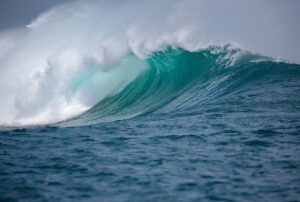
The United Nations plays a role
 The United Nations gives us a forum to bring those values to our global community. The United Nations Convention of the Laws of the Sea (UNCLOS) was adopted in 1982 to provide the principal international legal framework for oceans, establishing rules governing marine boundaries, navigation, natural resources and the peaceful protection of the seas. Think of it as a rulebook or constitution for the world’s water.
In August 2026, there was a weeklong debate about how nations can protect the world’s oceans. The emphasis was on protecting marine ecosystems, reducing pollution, sustaining ocean resources and strengthening cooperation among nations.
With rising sea levels, severe storms and environmental changes, the oceans do not recognize political boundaries, and their protection requires nations to work together. This is in consort with the United Nations’ Sustainable Development Goal 14: Life Below Water, and the Agreement on Marine Biodiversity Beyond National Jurisdiction (GGNJ), also known as the High Seas Treaty.
Sea level is more than water reaching the shoreline. It raises numerous questions about communities, human rights, international law and justice. As a member of FJMC International’s Shomrei Ha’aretz (Environment) Committee, we don’t just admire the Earth, but accept responsibility for what happens to it, and the people who protect it.
Why is this important?
To understand the importance of the Laws of the Sea, just look at the news.
The Strait of Hormuz: When we fill our cars with gasoline, and turn on the lights, or order a product online, and ships cannot safely travel through the world’s oceans, the consequences reach all of us.
Black Sea and Ukraine: Grain exports from Ukraine and Russia have been disrupted by war, with potential consequences for food prices and food security.
The 2026 El Nino and warming oceans: It is associated with extreme weather, flooding, drought and food-security concerns.
Why is this a subject for FJMC and our members? Because FJMC emphasizes the concepts of Friendship, Judaism, Mentorship and Community, and this issues matter to nations and communities around the world, including our own.
Addressing the challenges facing our oceans provides an opportunity for Jewish men to educate lead and serve. The Laws of the Sea teach us not only the environmental issues – but also a moral responsibility to preserve the world, shared by all humanity.
What does this mean for an FJMC Men’s Club or Brotherhood affiliate?
 We must continue educating our members about climate-related health impacts, and the ways in which we can help. Those include by supporting synagogue sustainability efforts, partnering with organizations for shoreline clean-ups, engaging in environmental advocacy, planting trees, preparing for storms and natural disasters, organizing beach, river or park cleanups, promoting recycling and water conservation, and participating in volunteer relief efforts. Caring for the oceans is an expression of bal tashchit (avoiding needless destruction) and tikkun olam (repairing the world) for future generations. The sea doesn’t separate us – it unites us as a shared commitment to community, stewardship and repairing the world, one action at a time.
As Jews we say – whoever saves one life, it’s as if they saved the entire world. It can be said that saving one stream, one shoreline and one community is a mitzvah that ripples outward, beyond what we can see.
The United Nations Law of the Sea reminds us the oceans are a shared resource, and that protecting them is a responsibility we carry together. As a father and grandfather, I want future generations to inherit clean water, healthy ecosystems and a healthy planet. Don’t you?
“It is not your duty to finish the work, but nether are you free to desist from it .”
(Pirkei Avot 2:16)
Dr. Steven Mandel is FJMC International’s U.N. representative, a HaD’var contributor, member of FJMC’s Shomrei Ha ‘aretz (Environment) Committee, and vice president of outreach and engagement for FJMC’s New York Metro Region.
Need technical or website help? Email us at
Copyright © 2026 FJMC International. All rights reserved. Website designed by Addicott Web. | Privacy Policy