




 This summer, we were all reminded by the film director Christopher Nolan that our word ‘mentor’ was given to the world by the Greek poet Homer, as Mentor is the character who trains and advises Telemachus while the latter’s father, Odysseus, is away. I begin with that allusion because I think the character illustrates well the definition of a mentor—he is something like a second father. In light of the Hellenic epic, what Judah is commanded to do in Isaiah 1:17 sounds as if it could also apply to mentees (“Learn to do right”) and mentors (“Take up the cause of the fatherless”).
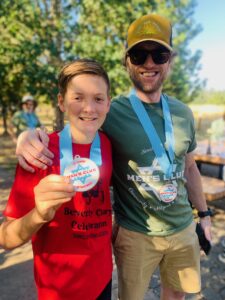
On September 16, 2022, after a two-years-long process, I was matched by Big Brothers Big Sisters (henceforth BBBS) with my Little, and I became a Big Brother to a 9-year-old boy that I will call J. The process was stalled by the pandemic, but it was worth the wait. BBBS is the organization around the country that matches adults with youngsters in need of a mentor. I signed up in 2020 because I was listening to a medical podcast and the subject was the worsening health outcomes, particularly mental health outcomes, of boys. Whether I was right or wrong, I felt at that time I could be of use to some boy out there: I had just separated from the United States Air Force after seven years of active duty service (preceded by five in the reserves); I am a pediatrician and published poet; I am the father of a flourishing daughter who was 10-years-old at the time—I felt I had the requisite expertise and experience to make a positive difference in a boy’s life.
 I suppose one could argue that what I do—since this is an ongoing relationship—is an act of tzedakah; since that fateful day, I have given J multiple hours of my time on a biweekly basis. It is self-evident that all the volunteers with BBBS embody chesed. What is not self-evident, however, is the way that we are practicing tikkun olam. My Little does not come from a broken home—far from it. (I grant that many Littles might, but that is not my experience.) There is a natural imbalance of life experience between a mentor and his mentee, with a greater portion of it being on the mentor’s side. Experience, especially pain, has forever been recognized as the best teacher. This includes moral pain, like shame and guilt, which is probably what inspired the English poet W.H. Auden to write, “Believe your pain.” There is also the pain of failure, of not achieving what we set out to do. Much of what mentors do is to guide young charges onto the right path and away from the wrong one—many a mentor knows the latter from his past missteps; put another way, pain marks out the wrong path. (Discomfort and pain are not the same, however; growth occurs when one leaves one’s comfort zone, and that is a good thing.) In a poetic sense, then, mentors do not so much repair the present world as they do that of the past as it presently exists in their memories.
In The Human Condition, Hannah Arendt explains that because an action cannot be undone, we need the power to forgive errors so that we can move on. With Judaism’s emphasis on justice (“Justice, justice you shall pursue…”), it might be hard for a person to live with a past sin—no matter how big or small (recall that the category of sin includes rechilut and lashon hara alongside murder and adultery)—and ever know inner peace, which is essential for both health and well-being. In their wisdom, our Jewish forefathers devised Tashlikh; G-d commands us to observe a Day of Atonement, and we consider this the holiest day on our calendar—seeking forgiveness and acknowledging the need for it are no small parts of our tradition.
Because mentors help another avoid the same painful errors they made—and because they are attempting to protect mentees from harm while imparting whatever valuable lesson the harmful experience taught them—mentors are, in essence, redoubling the mentee’s well-being. For all this, I believe mentoring has a redemptive quality for the mentor. Because they turn what was a negative for them into a positive for others, it helps them to forgive themselves for past wrongs. Loving ourselves is not always easy, but—to rephrase Leviticus 19:18—showing love to a neighbor, through mentoring or other acts of service, certainly could lessen that difficulty.
In The Princess Bride, the Man in Black tells Buttercup, “Life is pain, Highness. Anyone who says differently is selling something.” While that line by William Goldman may be hyperbolic, it is true and something of a paradox: pain is hateful to a normal person, yet life itself is normally esteemed as the highest good. Therefore, when a mentor aids a mentee by steering him clear of a painful experience that he himself went through and rightfully hated, he is positively honoring Rabbi Hillel’s famously negative teaching: “That which is hateful to you, do not do to your fellow.” The mentor does not allow that which was hateful to him to happen to his mentee; not if he can help it.
My experience these past four years mentoring J has been a boon to my well-being, and I pray—and do my best to make certain—that it has been, and continues to be, for him too. Along with multiple visits to theme parks, basketball games, and arcades, he has also noshed in my family’s sukkah and spun the dreidel with me. I have had the joy and privilege of seeing him grow from a fun-loving, kind yingele—one with many natural gifts—into an intelligent and conscientious teenager, a budding mensch. His road from 2022 to the present has not been without its bumps, but whose is? I like to think my presence helped him avert a few rough patches on his journey thus far. Let us say that every regret is an etrog; well, life will always give you those, but with a mentee you can make Etrog-ade, which increases everyone’s well-being and refreshes your soul.
With gratitude,
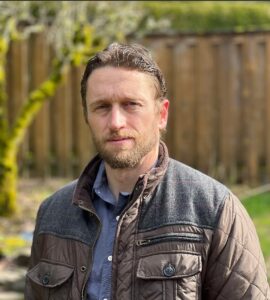
Jacob Sheff, DO
President, Men’s Club, Congregation Neveh Shalom
Health and Wellness Committee Co-Chair, FJMC International
Need technical or website help? Email us at
Copyright © 2026 FJMC International. All rights reserved. Website designed by Addicott Web. | Privacy Policy