
What is Keruv?
In the context of the FJMC and Conservative Judaism, Keruv focuses on welcoming interfaith couples and families into synagogue life, rather than allowing differences in religious backgrounds to become barriers to participation.
Keruv can include, welcoming interfaith families, supporting Jewish identity, educating without judging, building relationships, and training synagogue leaders. Keruv is not asking people to become Jewish before welcoming them. It is about welcoming them so that meaningful Jewish connections can grow. It is where the non-Jewish partner is respected, and the entire family has a reason to belong.
For the FJMC, Kerub is an opportunity for men’s clubs to take an active role in welcoming families, supporting Jewish continuity, and strengthening the future of Conservative Judaism.
7 reasons for Joining a Conservative rather than a reform synagogue:
1. Stronger connection to traditional Jewish practice
2. A meaningful Jewish identity for their children
3. A balance between tradition and modern life
4. A strong sense of community
5. A welcoming rabbi and congregation
6. A desire for Jewish education and lifelong learning
7. A personal family connection to Conservative Judaism
10 Myths of Keruv that need to be addressed:
1. Abandoning the Jewish traditions – NO… synagogues continue to
observe it’s Jewish traditions
2. 2. Non Jewish partner has no place in Jewish life – NO – Maintain an important part of the Jewish family
3. Interfaith families will not raise Jewish children – NO
4. Keruv means lowing Jewish educational standards – NO
5. We might offend someone by discussing interfaith issues – NO
6. Welcoming interfaith families threatens Jewish continuity – NO
7. Keruv is only the rabbi’s responsibility – NO
8. Keruv is only about weddings – NO
9. Welcoming a family means every religious role must be open to everyone – NO
10. An interfaith family wants to join , they will find their way in – NO. They may not know whom to approach for fear of rejection.
What can the FJMC do about these myths:
Educate, Engage, Include
The greatest myth is that we keep people at a distance. We open our hearts, our homes and our communities, We strengthen it by building up
relationships that give families a reason to stay connected.
What is the role of the rabbi and congregation ?
RABBI: Make welcoming explicit
Teach without alienating
Listen and guide
Lead the congregation by example
CONGREGATION: At the entrance
In the men’s club
In education
In worship
In social life
In leadership
The obstacles can include, fear of compromising tradition, unspoken exclusion, resistance from established members, different expectations
from the couples, good intentions without sustained action.
WHAT can The FJMC do?
1. Designate a keruv liaison or committee.
2. Train members with welcoming conversations.
3. Pair interfaith families with experienced congregants.
4. Offer social and service activities.
5. Ask families what would make participation easier
The rabbi can open the door, but the congregation must make the people feel at home. Keruv succeeds when a family no longer feels that is asking permission to belong, but it knows that it has found a community where it belongs.
Why might interfaith families reject Keruv?
Fear of pressure to convert, concer about loosing personal identity, previous experience with rejection, disagreements between partners, concern about children and religious identity, a preference for a different community, a desire for privacy and independence, a mismatch between promises and reality no desire for greater religious involvement. When a family declines keruv, its not a rejection of Judaism, Jewish identity or the Jewish community. It simply means that a particular approach does not fit a family’s needs. We must not pressure, understand and not judge. We need to build relationships without making acceptance conditional on a families’ choices. We need to recognize that many families may not continue to be engaged over time, and we need to ask what congregations can do to keep the door open. We need to ask ourselves
“What could we have done differently to help you feel that you belonged?“
Summary: Through Keruv, the FJMC can lead the way to transform welcoming into belonging, break down barriers, embrace interfaith families,
To build lasting relationships that strengthen Jewish identity, foster belonging, and sustain Jewish life for generations to come.
Members of his club had concerns, worry and sadness about his ability to recover. Over time, they learned how to recalibrate how to communicate and engage with him. Over their initial fear, that this could happen to them, it led to respect and admiration, with stronger bonds, and closer emotional connections.
Dave’s family felt a deep, powerful pride in his accomplishments. From their journey of fear and grief, they arrived at a place to view his courage, persistence, emotional bravery, and survival, not just as a skill but as a source of profound pride and love.
From a personal perspective, my ability to comfort Dave, and others, seems to have made me more honest, grounded in Jewish values of chesed and responsibility We can then show up as a community that will not them fail. Our “presence “matters, so when the next crisis comes, no one will face it alone.
Art supports brain health, emotional regulation, empathy, resilience and lifelong cognitive function. It activates nonverbal outlets for anxiety, depression, burnout and post-traumatic stress disorder. It lowers cortisol to reduce stress, and trauma informed coping skills. Art inspires us, its transformative and empathy producing. It can create cognitive shifts by challenging our perceptions to better understand our place in the world. Art helps us explain our creativity and express ourselves in unique ways. Art moves us to feel something and tell stories. It helps us experience sorrow and joy and brings people together.
In Dave’s case, his art was his expression of emotion, where he was most able to communicate his feelings and thoughts. His art taught us that we could communicate where words might not, layering symbolism with meaning. His drawings resonated and inspired us to tell our own stories. When his body faltered, his art healed places the illness could not reach.
In conclusion: Through art, he connected to his Jewish faith by transforming creativity into a form of avodah – sacred work and spiritual expression beyond speech. Sharing his work with his men’s club gave the process of communal meaning, reflecting the Jewish value of kehillah (community) and mutual support. The encouragement and recognition he received strengthened his sense of belonging, turning each finished object into both a spiritual affirmation and shared symbol of resilience and recovery.
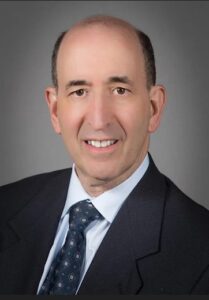 Steven Mandel MD
Clinical professor of Neurology
Hofstra Northwell
Adjunct Professor of Medicine
NY Medical College
October 14, 2026
“BEYOND KERUV…Looking back and moving ahead” published in the Winter 2026 KERUV edition of Pride & Prejudice.
Need technical or website help? Email us at
Copyright © 2026 FJMC International. All rights reserved. Website designed by Addicott Web. | Privacy Policy


